Compared with the prior versions of the CAPS, the CAPS-5 includes several new features. Select each feature to learn more.
Assessment of one traumatic event or a group of traumatic events
Earlier versions of the CAPS asked respondents to describe briefly up to three traumatic events to keep in mind during the interview. CAPS-5 requires the identification of a single index trauma(s), or a group of thematically related traumatic events, to serve as the basis of symptom inquiry.
Return to list
Assessment of the dissociative subtype
Whereas earlier versions of the CAPS assessed for various aspects of dissociation, the CAPS-5 specifically assesses for the two dissociative symptoms which are associated with the PTSD dissociative subtype. These include depersonalization (feeling detached from, and as if one were an outside observer of, one's mental processes or body) and derealization (experiences of unreality of surroundings). Individuals who meet criteria for PTSD and endorse at least one of these symptoms are considered to meet criteria for the PTSD dissociative subtype.
Return to list
Three new items on the CAPS-5 reflect new PTSD symptom criteria included in DSM-5. Specifically, new items assess persistent negative beliefs or expectations about self, others or the world (D2), distorted blame of self or others (D3), and self-destructive or reckless behavior (E2). In addition, other CAPS-5 items reflect revisions to existing PTSD symptom criteria.
Return to list
Items rated with single severity score
As with the earlier versions of the CAPS, CAPS-5 symptom severity ratings are based on symptom frequency and intensity (except for amnesia and diminished interest, which are based on amount and intensity). However, whereas the previous versions of the CAPS required separate frequency and intensity scores for each item, CAPS-5 items are rated with a single severity score ranging from 0-4, which reflects both frequency/amount and intensity.
Return to list
On earlier versions of the CAPS, prompts were arranged in a left to right format, which created some back and forth. The new layout is arranged from top to bottom to allow prompts to flow more smoothly.
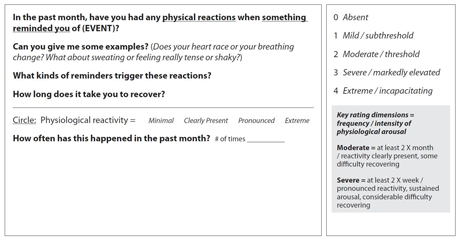 Long description for this image
Return to list
Long description for this image
Return to list
The most common scoring rule for the CAPS for DSM-IV was the "F1/ I2" rule, which requires a frequency rating of at least 1 and intensity rating of at least 2 for a symptom to be counted towards a PTSD diagnosis. On the CAPS-5, symptoms with a severity rating of 2 ("moderate") or higher are counted towards diagnosis. The severity score is determined via an algorithm that takes both frequency and intensity into consideration.
Return to list