Begin your interview session by explaining the purpose and structure of the CAPS-5. Introduce the CAPS-5 by clarifying these four points below. Select each topic to learn more.
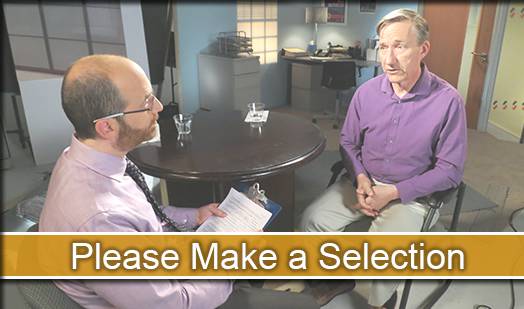
Begin by asking the interviewee to state his/her understanding of the purpose of conducting the interview. This provides an opportunity to correct any misconceptions and to provide necessary clarifying details.
Return to listClarify how information obtained during the CAPS-5 administration will be used (i.e., to plan treatment interventions, assist in disability determinations, establish eligibility for research protocols, or evaluate program effectiveness). Also, clarify who will have access to the results of the assessment.
Return to listOrient the client to the amount of time needed to complete the CAPS-5, which is typically about 45 minutes but can be longer or shorter depending upon the manner in which interviewees respond to interview prompts and questions and the severity of the interviewees' symptoms. Responses that clearly and concisely answer the questions will result in shorter interviews. Explain that the CAPS-5 requires that you read standard interview questions for the purpose of ensuring objectivity and consistency. Most interviewees will accept this rationale without difficulty.
Let the interviewee know that there are no right or wrong answers to the questions. Encourage him or her to give specific answers to specific questions, so that he or she remains focused on the questions being posed and does not elaborate unless specifically requested. You will then be able to use your time to pursue lines of inquiry that will aid in making the most accurate rating.
Return to listIn many cases, you may wish to explain to the interviewee that he or she may experience some emotional distress as a result of discussing past stressful events in the interview; reassure him or her that this distress is usually mild and transient.
You can state:
In this interview, I will be asking you questions about some difficult or troubling experiences you may have had. Although this might be upsetting, it is important to remember that such reactions are usually not severe and do not last very long. However, it is important for you to let me know if you are getting upset so that I can help you if you need it.
Return to list